Yoga Mats for Small Spaces and Shared Floors
Compare grip, cushioning, size, smell, and storage for realistic home practice.
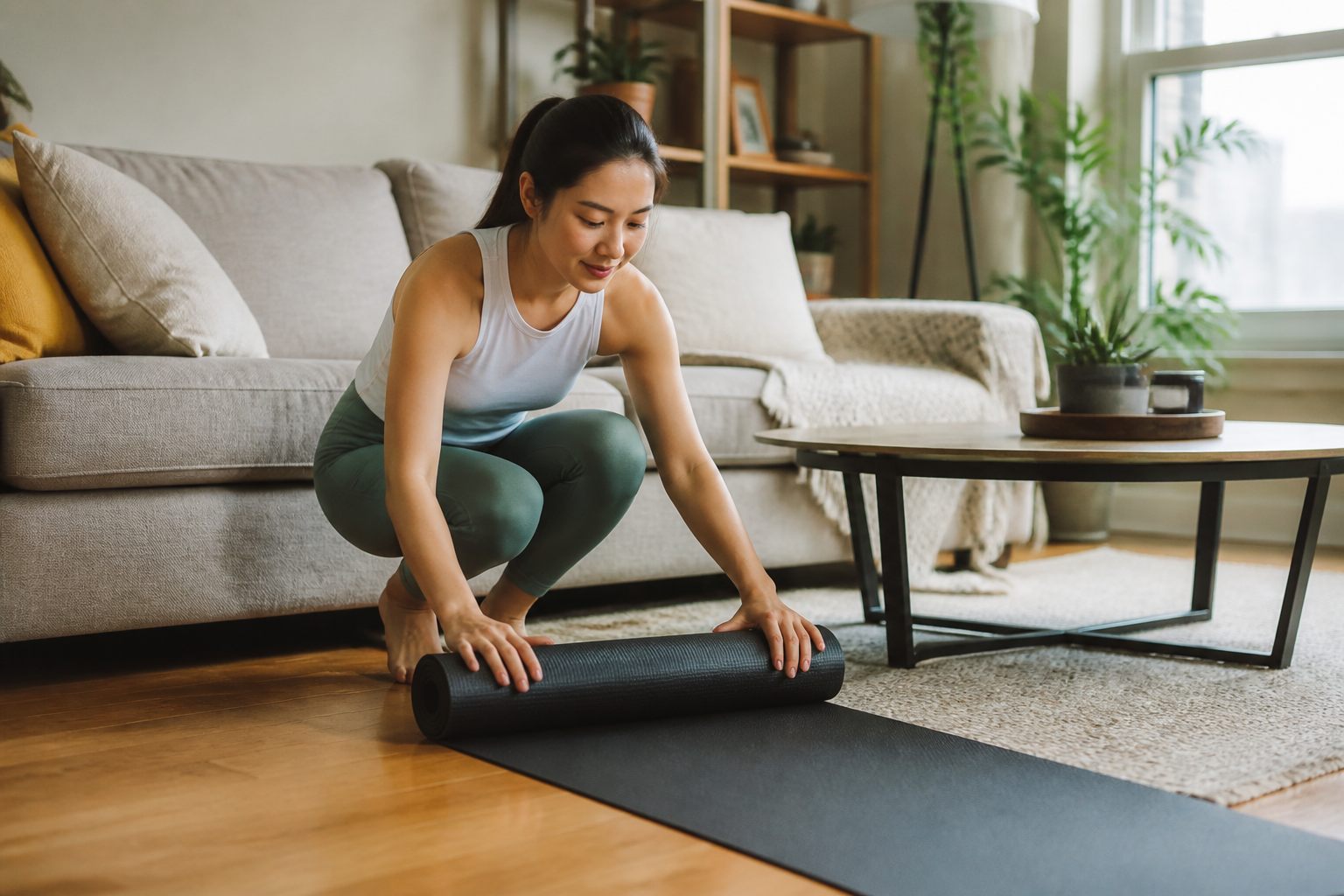
An apartment resident rolling out a mat between the sofa and coffee table. A listing cannot tell you whether a purchase makes that particular routine easier. Start by identifying the part that currently fails: access, storage, cleaning, comfort, or carrying.
Begin with the constraints
Measure the clear floor area before choosing extra length. Write down the result before comparing products; it will be more useful than a rating averaged across buyers with different spaces and habits.
The options worth comparing
Depending on your routine, compare thin travel mats, cushioned mats, and natural-rubber options. Look at the dimensions and care instructions for each type, then decide which tradeoff you can live with. A category name is not a specification: construction, accessories, and return terms vary by seller and model.
What is worth paying for?
Choose grip for active practice and cushioning for slower floor work. Compare the total price, including any replacement pieces or required accessories. Read recent critical owner reviews for recurring problems that resemble your own use case rather than treating a star average as proof of fit.
Compare current listings
Check dimensions, materials, maintenance, seller identity, and the applicable return window before ordering. PerkParcel may earn a commission from qualifying purchases.
Browse yoga mat optionsA reason to wait
If you cannot verify the measurements or describe a routine this purchase would improve, pause. A discounted item can still be a poor value when it creates storage, cleaning, or replacement work you had not planned for.
The decision
Use the actual space and routine as the filter, then choose the simplest option that meets the need. Recheck the seller's current information at checkout; specifications and policies can change.
Related wellness guides

Shower Caddies for College Dorms: What Works in Shared Bathrooms
Compare drainage, carrying comfort, compartments, drying, and storage for repeated trips down the hall.
· 7 min read
Desk Footrests for More Comfortable Workdays
Choose height, tilt, surface texture, and movement based on your chair, desk, and preferred sitting position.
· 7 min read
Everyday Walking Shoes: A Fit-First Buying Guide
Use your route, socks, foot shape, and daily distance to narrow the field.
· 7 min read